Pool Landscape Design That Makes the Water Feel at Home
A swimming pool can be finished and still make the backyard feel unfinished.
The water may look good, the deck may be complete, but without the right landscape around it, the pool can feel exposed or separate from the rest of the property.
Hillside Pool Builder plans pool landscaping and landscape design around the water, home, deck, and views. Tell us whether privacy, planting, or a complete backyard plan is the priority for your project.
Planting can soften hard surfaces, create privacy where it matters, frame a view, define quieter areas and help a new pool settle naturally into its surroundings.
The objective is not to fill every open area with plants. It is to give the pool the right setting.
Begin With What Feels Missing Around the Pool
A useful landscape plan starts with the experience of the space rather than a plant list.
Some homeowners have a pool area that feels too exposed. Others want more privacy from neighboring properties. There may be a blank area beside the deck, a view that deserves more attention or too much hard surface with nothing to soften it.
Start with the problem.
Ask what you want the landscape to change:
- Do you want more privacy?
- Does the pool area feel too bare?
- Is there a view you want to preserve?
- Do you need visual separation between different outdoor areas?
- Is there too much paving around the water?
- Should planting help guide attention toward the pool or away from a less attractive area?
- How much landscape do you actually want to maintain?
Those answers give the planting a purpose before individual selections are made.
Give the Pool Enough Green Space Without Crowding It
It is easy to react to a bare pool area by adding too much landscape too close to the water.
That can create another problem.
The pool still needs comfortable deck space. People need room to walk, sit and move between the house and water. Furniture should not feel squeezed between planting and the pool edge.
A better approach is to decide where landscape has the most value.
Some areas may benefit from fuller planting. Others may need to stay open because they support circulation, views or poolside use.
The finished setting should feel balanced rather than overfilled.
Use Planting to Soften Large Hard Surfaces
Pools naturally introduce a significant amount of built material into the backyard.
There is the water itself, then coping, decking, patios, walkways and sometimes retaining structures or other hardscape.
Without enough landscape, those surfaces can begin to dominate the property.
Planting can create contrast.
It can break up long paved edges, soften the transition between the pool and the rest of the yard and help built surfaces feel more integrated with the home.
The goal is not to hide the construction.
It is to give it the right amount of softness.
If the surface directly around the water is still being planned, explore our pool deck construction options before the landscape boundaries are finalized.

Create Privacy Where You Actually Need It
Privacy does not always require screening the entire backyard.
Often, only a few specific sightlines are uncomfortable.
A neighboring window may overlook the spa. One side of the pool may feel exposed. A seating area may need more separation than the rest of the yard.
Landscape design can address those specific areas without enclosing the property completely.
That can help preserve openness while making the places where people spend the most time feel more comfortable.
Think about privacy from the places where you will actually sit:
- inside the pool;
- in the spa;
- on lounge furniture;
- around a dining table; and
- from indoor rooms looking outside.
The solution can then respond to the real sightlines rather than creating a generic perimeter screen.
Protect the Views Worth Keeping
Privacy and views often need to be balanced.
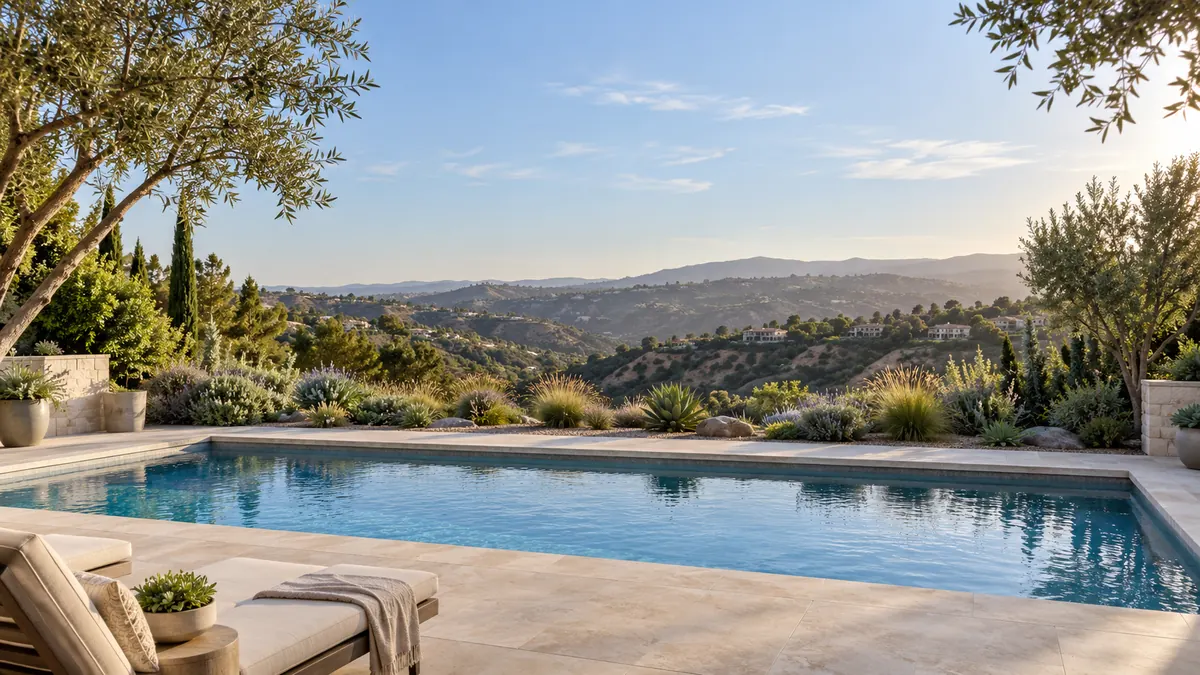
On a hillside or view-oriented property, planting that becomes too dominant can interrupt one of the strongest features of the backyard.
Landscape should frame important views rather than automatically filling them.
A lower planting direction may make sense in one area while greater screening is useful elsewhere.
The pool, spa, patio and primary seating positions can all have different sightlines.
A thoughtful landscape layout considers those views before planting creates permanent visual barriers.
For properties where elevation and views shape the entire pool project, learn more about hillside pool construction.
Landscape the View From Inside the House Too
The backyard is visible even when nobody is outside.
A pool may sit directly beyond large doors or windows, making the landscape part of an everyday interior view.
That creates an opportunity to think beyond the pool edge.
Planting can frame the water, soften property boundaries and give the eye somewhere to travel beyond the pool.
It can also help keep less attractive elements from becoming the focal point from inside the house.
A successful landscape should therefore work from both directions: from the backyard looking out and from the home looking toward the pool.
Make the Pool Feel Established, Not Newly Dropped Into the Yard
One of the biggest differences between a finished pool and a finished backyard is how settled the pool feels within the property.
Without surrounding landscape, a new pool can sometimes appear separate from the home and yard.
Planting can help establish transitions between the architecture, hard surfaces and water.
That does not require a heavily landscaped design.
A controlled landscape can be enough to make the pool feel as though it belongs to the property instead of sitting on top of it.
Keep Important Pool Areas Clear
There are parts of the pool environment where openness is more valuable than planting.
Entry points should remain easy to understand. Frequently used walking routes should not become narrow. Lounge areas need enough room for furniture. Views between important parts of the backyard may also need to remain open.
Landscape works best when it supports those activities instead of competing with them.
That means knowing where not to plant can be just as important as deciding where plants belong.
Consider the Spa as Its Own Experience
People use a spa differently from a swimming pool.
They tend to remain seated longer, which can make privacy, views and the surrounding atmosphere more noticeable.
Landscape around a spa may help create a quieter setting or soften nearby boundaries while keeping the space visually connected to the pool.
The planting should not make the spa feel hidden or difficult to reach.
If the spa itself is still being developed, see how custom spa construction can be coordinated with the surrounding pool and landscape.
Give Tanning Ledges and Shallow Areas Room to Breathe
A tanning ledge is often used as a place to relax rather than move actively through the water.
That means the nearby landscape becomes part of the experience.
Planting may help frame the shallow end or provide a softer visual backdrop, but it should not make the area feel enclosed.
The ledge, deck and surrounding landscape should have enough separation for each to work properly.
For more about shallow-water layout and proportion, explore tanning ledges and Baja shelves.
Landscape Around the Patio, Not Through It
A patio benefits from landscape because planting can define its edges and make a gathering space feel more comfortable.
But the patio still needs to work as a place for furniture and movement.
Plants should not interfere with chairs being pulled back, serving routes or normal movement between the house, patio and pool.
The right relationship often comes from framing the area rather than filling it.
If dining or seating space is still being developed, our patio construction service can establish the usable gathering area before the surrounding landscape is finalized.
Use Landscape to Separate Activities Without Building More Walls
Not every outdoor area needs a physical barrier.
Planting can help create subtle separation between different uses.
A dining area may feel distinct from the pool even when the two remain visually connected. A fire feature can become its own destination without requiring a solid wall around it. A quiet seating area can feel more intimate through landscape placement alone.
That softer separation can help a backyard support several activities without feeling divided into small compartments.
Work With Hardscape Instead of Covering It Up
Hardscape and landscape serve different roles.
The built surfaces provide circulation and usable space. Planting adds softness, privacy and visual structure.
Neither should be used to compensate for problems in the other.
If a walkway is in the wrong place, planting around it does not solve the circulation problem. If a backyard has too much unused paving, another hard surface may not make the space better.
The two should be planned as complementary parts of the yard.
Where the project needs walkways and broader built transitions beyond the pool deck, explore hardscaping.
Think About the Landscape Before Every Inch Is Paved
Landscape works best when room has been deliberately reserved for it.
If the pool, deck and patio use nearly every available part of the backyard first, planting may be reduced to narrow leftover strips.
That limits what the landscape can contribute.
When a new pool project is still being planned, consider early where greenery, privacy and visual softness should remain.
This can influence pool dimensions, deck width and the way gathering spaces are positioned.
For projects that have not yet moved into construction, custom pool design can help balance the water and surrounding areas before those dimensions become fixed.
A Hillside Needs More Than Decorative Planting
On a sloped property, landscape is experienced across different elevations.
Planting may be seen from above, below or directly across from the pool.
That changes how different areas relate visually.
The landscape should work with the grade rather than trying to make every part of the property appear level.
When structural or grade-related work is part of the project, those needs should be resolved through the appropriate construction planning rather than expecting landscaping to solve them visually.
Where a retaining structure is genuinely part of the site plan, explore retaining wall construction.
Plan for the Southern California Setting
A pool landscape in Southern California needs to make sense for the property and the way the outdoor area will be used.
Sun exposure, privacy, existing architecture, changes in grade and the amount of maintenance the homeowner wants can all influence the design direction.
A heavily planted yard is not automatically a better landscape.
Some properties work best with a restrained planting plan that keeps important views open and gives the architecture more presence. Others may benefit from stronger landscape structure around property boundaries and gathering areas.
The right amount of planting comes from the setting rather than a fixed formula.
How the Pool Landscape Takes Shape
Landscape design becomes easier when the big relationships are resolved before individual planting decisions.
1. Look at the Pool and Property Together
The first step is understanding the pool, home, deck, existing landscape and outdoor areas around them.
2. Identify the Main Landscape Goals
Privacy, softer edges, view framing, visual separation and a more finished setting may each require a different response.
3. Protect Circulation and Usable Space
Pool access, furniture zones and walking routes are kept clear before planting areas are developed.
4. Work Through Views and Privacy
Important sightlines are preserved while specific areas that need screening are addressed.
5. Establish the Planting Areas
Landscape zones can then be positioned where they contribute most to the pool environment.
6. Coordinate Built and Soft Surfaces
Decking, patios, hardscape and landscape are considered together so neither dominates the backyard unnecessarily.
7. Refine the Finished Setting
Once the major relationships are established, the landscape can be developed as part of the complete outdoor project.
What Should Good Pool Landscaping Accomplish?
A successful pool landscape should improve the backyard without making the pool harder to use.
It can help:
- soften large areas of decking and hardscape;
- create privacy along specific sightlines;
- preserve or frame important views;
- make the pool feel more established within the property;
- distinguish gathering areas without closing them off;
- connect the architecture with the outdoor space; and
- keep enough openness for comfortable circulation.
The goal is not to make the landscape the loudest part of the property.
It should make everything around it feel more complete.
When Pool Landscaping Becomes Part of a Larger Outdoor Plan
Sometimes the landscaping is one piece of a much broader backyard project.
The homeowner may also be planning an outdoor kitchen, fire feature, patio and several gathering areas around the pool.
At that point, the project becomes less about planting around the water and more about how the entire outdoor environment works together.
The landscape can still provide privacy, softness and definition, but the bigger decisions involve how people use the complete backyard.
If several outdoor areas need to be developed as one project, explore our outdoor living approach.
What Affects Pool Landscape Design Cost?
There is no single cost that applies to every pool landscape.
The scope depends on how much of the property is being addressed and what the landscape needs to accomplish.
Factors may include:
- the size of the area around the pool;
- existing site conditions;
- amount and type of planting involved;
- privacy and screening needs;
- changes in grade;
- relationship with hardscape and patios;
- preparation needed around existing outdoor areas; and
- whether the landscape is part of a larger pool or outdoor project.
A restrained landscape around one pool edge is a different project from redesigning the complete backyard.
A consultation based on the actual property gives a more useful understanding of the scope.
Pool Landscape Design Across Los Angeles and Southern California
Hillside Pool Builder is based in Sherman Oaks and serves Los Angeles and selected nearby Southern California communities. The wider service footprint also extends into Orange County and San Diego.
Different properties can call for very different landscape responses.
A compact Los Angeles backyard may need carefully placed privacy planting without sacrificing usable space. A hillside property may place more emphasis on open sightlines and how the landscape is viewed across changes in elevation. A larger yard may allow planting to establish stronger transitions between the pool and separate outdoor areas.
The landscape should respond to the actual home and site rather than a standard poolside planting formula.
See How the Landscape Changes the Finished Pool Area

What Helps Before a Landscape Design Conversation?
You do not need to know which plants you want before getting in touch.
It is more useful to describe what you want the landscape to change.
Helpful information can include:
- property location or ZIP code;
- photos of the pool and surrounding yard;
- areas where privacy feels limited;
- views you want to keep open;
- parts of the yard that currently feel too bare or too hard;
- outdoor spaces that need clearer separation;
- whether the pool is existing or being newly built; and
- how much landscape you want around the water.
If you have inspiration photographs, they can help communicate the feeling you prefer without requiring the finished project to copy another backyard.
Frequently Asked Questions About Pool Landscape Design
Pool landscaping can include planting and landscape planning around the water to create privacy, soften hard surfaces, frame views and help the pool fit more naturally into the backyard.
The appropriate distance depends on the pool layout, deck space, circulation and the type of landscape being planned. Important walking and furniture areas should remain comfortable rather than being crowded by planting.
Yes. Strategic landscape placement can help screen specific sightlines from neighboring properties while allowing other parts of the backyard to remain open.
Start by identifying the sightlines you want to preserve before deciding where stronger planting belongs. Privacy and view framing do not need to use the same approach throughout the entire yard.
When possible, considering the landscape early can help preserve enough room for planting, privacy and softer transitions instead of leaving only narrow areas after the pool and deck are finalized.
Yes. Landscape can be developed around many hillside pools, but changes in elevation and important views should be considered carefully so planting supports rather than obscures the setting.
Not exactly. Pool landscape design focuses primarily on planting, privacy, views and the softer environment around the water. Outdoor living planning covers the broader combination of gathering, cooking and other outdoor-use areas.
Cost depends on the size of the area, existing conditions, planting scope, privacy requirements, grade and how the landscape relates to other outdoor construction. A property-specific discussion provides a more useful answer than a generic price.
Give the Pool a Setting, Not Just a Border
The landscape around a pool should make the water feel more comfortable within the property.
It can give you privacy where you need it, preserve the views you care about, soften the amount of hard surface and help the backyard feel finished without filling every open space.
Tell us what feels exposed, unfinished or out of balance around your pool.
From there, the landscape can be shaped around the way you want the backyard to look and feel.