
Pool Excavation for New Swimming Pool Projects
A swimming pool is built from the design stage to the excavation stage.
The challenges encountered during excavation are affected by a number of site conditions including access, how far the grade changes from the street, available space to work and the volume of earth to be moved.
Hillside Pool Builder undertakes pool excavation for new pool projects, including challenging hillside sites. Tell us where the pool will sit and what access is available, so excavation can be considered within the full construction scope.
While pool excavation is the most labor intensive and complicated part of swimming pool construction, the focus should be on designing the pool in a manner that integrates with the house and other site conditions.
The goal should be to prepare the site for the construction of the swimming pool and not to excavate the pool.
Call us to discuss your swimming pool site.
Excavate to Building Pool Equipment
It is important to decide where the swimming pool should be built in relation to the house, other site conditions and how the equipment and material is transported to and from the site, to create a building plan that integrates the swimming pool construction with the least amount of problems and difficulties.
It’s useful to consider the following before breaking ground on your swimming pool project:
- Location of swimming pool
- anticipated pool dimensions and depth
- How machinery will reach the working area
- How much clear working space is available
- Is the yard level or sloped
- What are the obstructions (walls and improvements) on the yard
- How will soil be removed from the pool site
Some of these questions reflect practical issues and concerns that can comparably limit design options and alternatives to those related to pool shape.
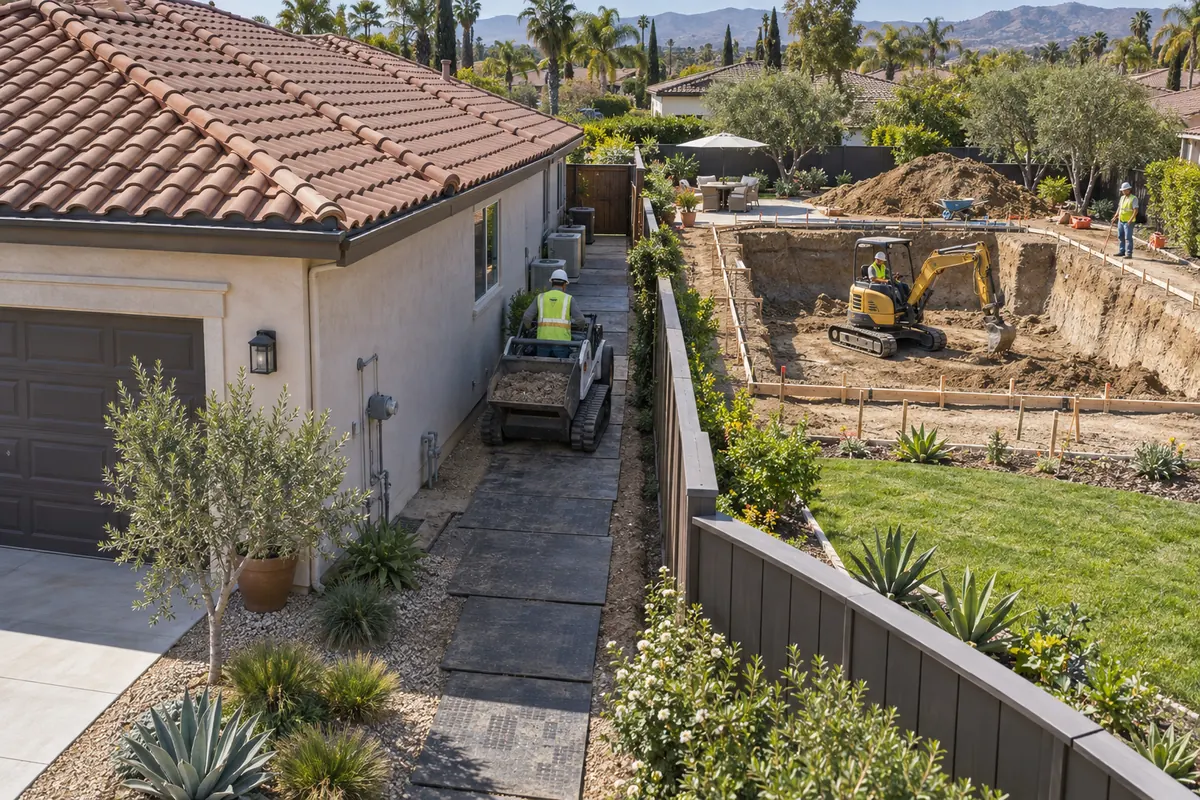
Why Backyard Access is Important
The conditions of excavation for two swimming pools of approximately the same size can be very different.
One situation can involve wide, unrestricted access to the swimming pool location. The other can involve restrictive access conditions such as a narrow, long access from the public street, and a change in elevation between the street and the location of the swimming pool, and obstructions such as improvements, landscaping and walls. Access conditions and restrictions can control the type and size of equipment which can be used to excavate the pool, and the method of removing soil from the pool site.
- Excavation conditions can be restrictive on many property situation in the Los Angeles area.
- The design of a swimming pool should take into consideration the available access to the swimming pool site. This is particularly true when the site conditions are similar to the conditions found on many of the property locations in the Los Angeles Area.
- This process encompasses functions from defining the limits of the pool, shaping and excavating to proper grading, and removal of excavated materials from the jobsite.
- Of primary concern, however, is getting it right.
- In pool construction, excavation is permanent and errors made at this stage are difficult and expensive to rectify.
- Therefore, excavation must not be used to work out the details of the layout of the pool but must be in conformance with pool construction plans.
- Excavation is directly related to the size and the depth of the pool.
- The greater the size and the depth of a swimming pool, the greater the volume of excavated material.
- Dimensions, however, are not the only considerations in the design of swimming pools.
- Edges of the pool can be designed to be at various levels to provide graduated steps and other water depths.
Shallow areas and other design elements of the swimming pool must also be considered to properly achieve the requirements of the client.
If you do not have a clear design of your pool, consult our pool construction professionals.
Excavating Slope Areas
Areas that are relatively level may permit a greater degree of flexibility during design and construction of a swimming pool.
Areas that are not relatively level may require greater involvement and interaction between the swimming pool design and construction professionals and the client during the pool design and construction process.
This is especially the case if the property is steep, and there are restricted or difficult access conditions.
The following questions are of a practical nature:
- What is the extent of equipment placement?
- What is the relationship of the proposed pool water elevation to the adjacent yard?
- What is the plan for the removal of material from the excavation?
- Is the location of the pool creating unnecessary conditions that could have been addressed in the plan?
When the conditions of the site, including the slope and the ground conditions, dictate the design of the pool, then a design for a pool situated on a slope should be addressed.
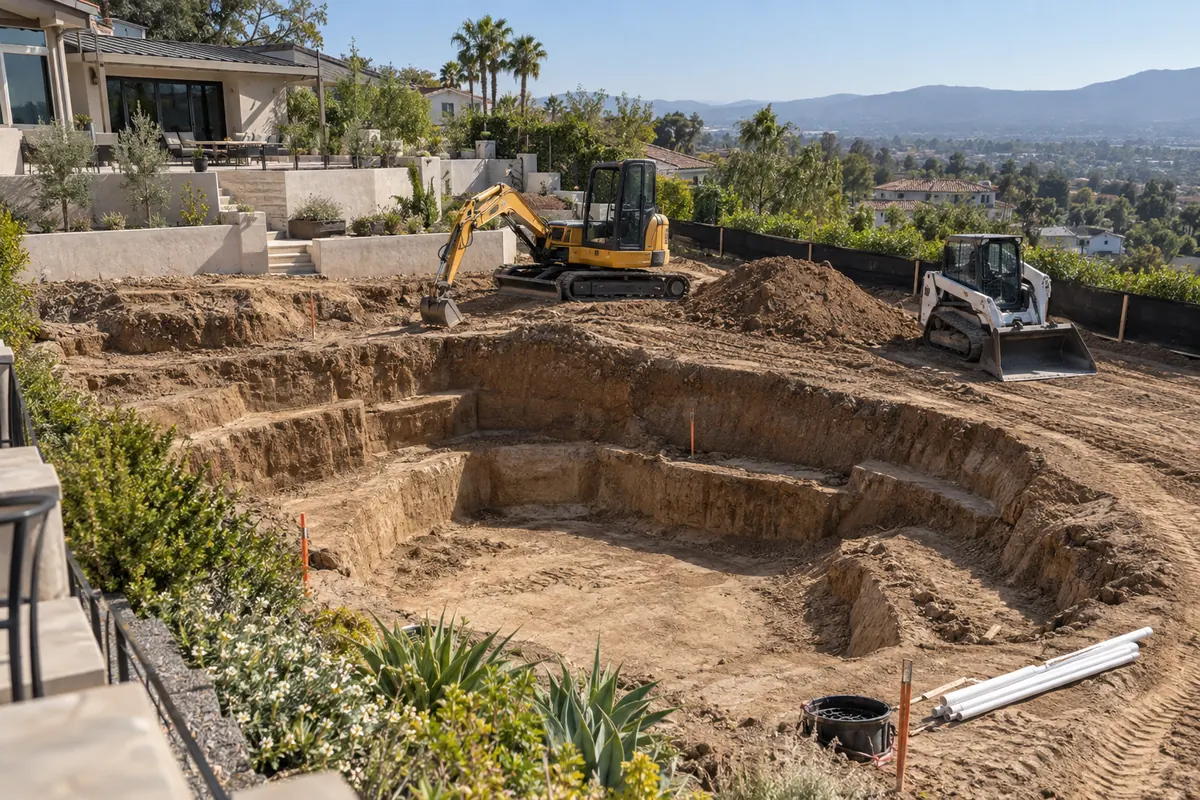
Hillside Construction and Excavation are Integrated
The layout and design of the excavation on a hillside is integrated with the design of the surrounding construction. There may be integration of other on-site structures, but not in all cases.
The excavation for a pool is a site preparation function and should not be integrated with other structures.
When a retained condition is dictated by the design or plan, then the design and construction of a wall should be addressed.
The Construction of the Pool should Dictate the Excavation
Excavation should not proceed construction. There are a number of conditions that should be determined prior to the commencement of excavation. The location of the pool should be determined prior to the construction of the pool because excavation dictates where other construction can take place.
Before excavation begins, the project team should be able to communicate the following about the pool:
- Location
- Dimensions
- Depth
- Horizontal steps and shallows
- Jet locations
- Spa location, if any
- Proximity to adjacent deck
- Conditional elevation changes
This does not require finalizing finish materials.
It does mean that the client and architect should be able to talk about the pool design in a meaningful way.
What if Access is Restricted?
Restricted access does not always prohibit the construction of a swimming pool.
It often requires special consideration during construction to address the following, if present:
- Obstacles along the only available path of construction equipment
- Walls that constrain the working space of construction equipment
Photos can initiate a dialogue, but to refine excavation strategies requires a site visit.
Access is often a major concern for our clients. Please share any access concerns with us.
What is Your Level of Backyard Access?
The Existing Conditions of Your Property Affect Your Options
When a backyard pool is excavated, it doesn’t occur in a vacuum. The constraints and opportunities of the site, such as improvements, conditions and constraints, help us locate and size the pool.
As part of your backyard, the existing conditions may need to be protected.
There are many aspects of the backyard that we need to consider before the pool excavation.
Addressing these conditions, constraints and opportunities can also help ensure there is no conflict between the swimming pool and other backyard conditions.
This is particularly helpful if you have a comprehensive plan for the backyard.
To help with planning your entire backyard, review the information on outdoor living.
Our Pool Excavation Process
Although processes will vary project to project, we generally follow the same steps when creating pool excavation plans.
1. Position of Pool
The first step is to analyze where the pool will be located in relation to other things on the property.
2. Access to Pool Location
Once the general location of the pool is determined, we analyze the path from the main access point of the property to the location of the pool.
3. Slope and Elevation Changes of Property
We determine the elevation of the various spots on the property where the pool will be located.
4. Obstacles and Barriers
We determine obstacles in the way of excavation and barriers around the edges of the proposed excavation.
5. Excavation of Pool
The final shape and elevation of the pool is determined and excavated.
6. Relocation of Soil
Once soil is removed from the pool excavation, methods to transport the soil through restricted access of the property need to be analyzed.
7. Preparation for Next Phase of Construction
The excavation of the pool is just the beginning of the pool construction process. For more information about the whole pool construction process, visit Custom Pool Construction.
This distinction is important because homeowners looking for excavation work generally have particular site/access concerns. On the other hand, homeowners looking for pool construction work generally has the entire project work concern.
Pool Excavation and Hillside Pool Construction
While the services are similar, the focus is different.
Pool excavation consists of the site preparation and excavation work for the pool.
Hillside pool construction is concerned with the entire construction of a pool and any related facilities situated on a sloping site.
Excavation work may be part of the overall hillside construction work, but other aspects may include the decision and determination of the best location for the pool and pool deck, and other construction related concerns.
If the main concern is the slope, the hillside construction work is more appropriate.
What Affects the Cost of a Pool Excavation?
There is no standard cost of excavation for a swimming pool. The cost may depend on the site conditions and the access work concerned. For example, the excavation work for a swimming pool constructed on a slope may cost more than the work for a pool constructed on a level site with full, unencumbered, and direct site access.
Limiting Factors:
- Size and depth of pool
- Shape of excavation
- Existing site conditions
- Access from the yard to the pool
- Space available to work in the pool area
- Quantity of material to be removed
- Site conditions and requirements
- Scope of pool work
- Design of the pool and property determine the extent of the work that can be discussed.
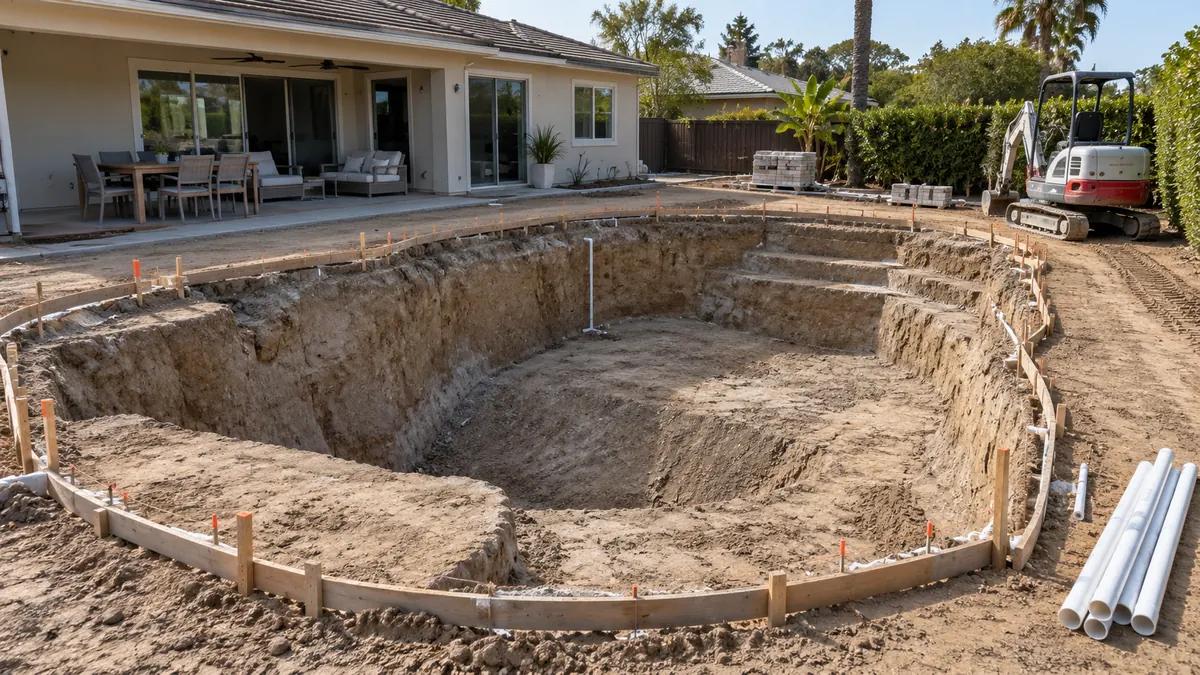
Early Analysis of Pool Work
Excavation is the stage of construction that raises the most questions about the site conditions of a property.
Conditions that appear favorable for the construction of a swimming pool may require considerable access and logistical challenges for the equipment and the placement of the pool materials.
The goal is not to unnecessarily complicate the design of the swimming pool.
The intent is to harmonize the swimming pool design with site conditions of the property.
Pool Excavation in California
Hillside Pool Builder excavates swimming pools in Los Angeles, Orange County and San Diego.
Conditions for the excavation of swimming pools in California vary. Urban lots in older areas of Los Angeles have different access conditions than rural or suburban lots. The topography of hillside locations creates different conditions from flatter sites.
For swimming pool excavation and construction conditions in your area, please visit our California service pages.
Pool builder service areas
For information about our core market, see Sherman Oaks pool builder.
Sherman Oaks pool builder
See Los Angeles pool builder for more service area information.
Los Angeles pool builder
Where is the Excavation Equipment Bound?
Equipment is chosen based on the details of the excavation and is not limited to a pool excavation. So do not let this worry you.
It may help to provide:
- The zip code or address of the property
- Pictures of the area where the pool will be located
- Access Pictures
- Pictures showing the location of existing walls and structures
- Pictures showing the pool location
- Pictures showing the grade or slope of the yard
- Any pictures of pool designs
- Description of any concerns you may have
Access pictures showing the route from the public areas of the property to the pool location may also be helpful.
Where Can I Find the Answers to General Questions About Pools?
What is pool excavation?
This is the process of removing soil to construct a swimming pool based on the design and location of the pool.
Why is access to the backyard important for pool excavation?
Access equipment for the pool excavation and removal of soil from the pool site may be restricted by the backyard and side yards. Other existing walls and structures may also impact access.
Can swimming pools be excavated on sites with a slope?
Pool excavation is typically possible on sloping sites. The specific method used will depend on the conditions of the site.
Is retaining structure work (i.e. the use of caissons or retaining walls) always required during pool excavation on a slope?
Not necessarily. The natural slope of a site does not mean the retaining structure work is implied.
What determines the cost of excavation work?
The cost of excavation is determined by the dimensions of the excavation, the depth of excavation, the site slope, the amount of soil and other site conditions.
What is the minimum pool plan information required before excavation work can be done?
The information needed to define the general location and limits of a pool prior to excavation work is site-specific.
Excavation is completed according to the project plan; the pool construction proceeds to the next phase.
Where does Hillside Pool Builder perform excavation?
Hillside Pool Builder provides pool construction services in and around Los Angeles, as well as San Diego and Orange counties.
How Is Your Pool Site Accessed?
You are not required to determine the means of pool site excavation.
In what location do you want the pool? What is the condition of your site? Is your site adjacent to other sites? If your site is tight, or if there are retaining walls and other improvements on your site, tell us.
Let us know about your property so we can provide an estimate.